
Threading machines
CP-2200 threading machine standard
Works with traditional thickness threads, suitable for most garments
works with a traditional metal needle
reliable, fast service
no salary will be charged
cheap, reliable device


TG-TACHER II threading machine standard
Works with thin (microstandard) threads, suitable for almost most garments
continuous supply of parts
reliable, fast service
long-lasting metal parts
A new knife is always inserted into the machine when the needle is changed.
no salary will be charged


TG-TACHER II threading machine Fine
It works with extremely fine threads, recommended for delicate garments. (The needle with which the thread is inserted is very thin)
continuous supply of parts
reliable, fast service
long-lasting metal parts
A new knife is always inserted into the machine when the needle is changed.
no salary will be charged


TG-TACHER V blade shooting machine LONG std.
A special machine that works with traditional thick yarn, but with needles of different lengths, ensuring the safe joining of multiple products with one plastic yarn. (e.g. socks)
continuous supply of parts
reliable, fast service
long-lasting metal parts
no salary will be charged


V-TOOL hand thread knitting machine
A special machine that threads and loops the hand thread onto the selected product
continuous supply of parts
reliable, fast service
long-lasting metal parts
works with plastic filament
no salary will be charged

FasBano'k hand knitting machine
A special machine that threads and loops the hand thread onto the selected product
continuous supply of parts
reliable, fast service
long-lasting metal parts
works with both plastic and textile fibers
no salary will be charged

USER GUIDE

1. PLASTIC INSERT:
There are 50 or 100 hanging threads in a block

2. FORM OF SCORING NUMBER:
One end of the thread is thinner - this end will be shot into the product. The other end is wider - this is what holds the cardboard label.

3. LOADING INTO THE MACHINE I.:
Insert the thinner end of the thread block (T shape) into the T slot of the machine.
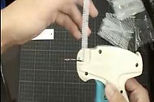
4. LOADING INTO THE MACHINE II.:
Push the threads into the machine until they stop.

5. TAG:
Place the perforated cardboard label on the needle.

6. LABEL LOCATION I.:
Find the place on the product where you want to hang the cardboard label (e.g. sewn-in textile label).

7. LOCATION OF THE LABEL II.:
We pierce the textile label, then...

8. LOCATION OF THE LABEL III.:
...we clamp it to the machine. By pressing the trigger, the thread is fed through the machine's needle into the textile label.

9. FINAL OPERATION:
When the machine is pulled away from the label, the plastic thread separates from the block.
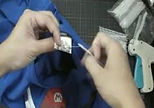
10. HANGING PRICE LABEL IN PLACE:
Control.